
POLICY REVIEW | APRIL 2026
BACKGROUND
Forest dwellers and forests have long existed as a paradox in India. Policies pre-independence perceived these rich ecosystems as “threats” to the ‘civilisation’ and were ruthlessly exploited for natural resources like timber, minerals, and other forest produce. After the independence, the story didn’t change much for a long time. These vibrant ecosystems then started being perceived as a threat to ‘development’. Urbanisation, policy changes and relentless economic development have compelled indigenous forest and coastal communities to migrate and look for new livelihoods and adapt to increasingly unstable and degraded environments.
Climate Change is also resulting in and amplifying the existing inequalities, particularly among the marginalised groups. The ones who have been displaced due to the adverse effects of climate change or ‘development’ had to abandon not only their land but also their culture and safety nets. Indigenous women bear an even heavier burden because they are often the primary caregivers and resource collectors in these communities. Relentless urbanisation has increased these challenges and has severed the transmission of ancestral knowledge. The increase in adverse effects of global warming has compelled these communities to abandon their historical ways of life in favour of alternative means of survival, such as honey harvesting, agricultural practices, etc. This shift not only threatens their cultural heritage but also limits their participation in decision making, undermining their health, education and economic rights.
From 2002 to 2024, India lost 348 kha of humid primary forest, making up 15% of its total tree cover loss in the same time period. This resulted in increased loss of biodiversity and furtherance of climate change. Yet even though the climate stress has become increasingly severe, it has been seen that the best solutions still can come from the wisdom and knowledge of these communities. Youth and women’s groups have been at the forefront of climate stewardship movements and have brought important perspectives and time-tested practices in sustainability and the fight against climate change. This traditional knowledge is not only required for climate change mitigation but also for climate change adaptation.
INDIGENOUS CONSERVATION AND ADAPTATION: POWERFUL PRACTICES, UNIQUE KNOWLEDGE
Many indigenous communities, including the ones along the Bay of Bengal in India, have practised sustainable living and biodiversity protection for centuries. For instance, the Khadia tribe in Odisha utilises natural materials such as pumpkin shells as water bottles and leaves as plates and mats. Indian tribes, both forest-dwelling and coastal, have been exemplary models of harmonious coexistence with nature, practising sustainability in ways that contemporary conservation science increasingly aspires to replicate. Many forest tribes, including the Gonds of central India, have historically engaged in agroforestry, combining trees and crops to preserve biodiversity, enhance soil quality, and mitigate erosion; they prudently collect fruit and timber, facilitating natural regeneration and minimising waste.
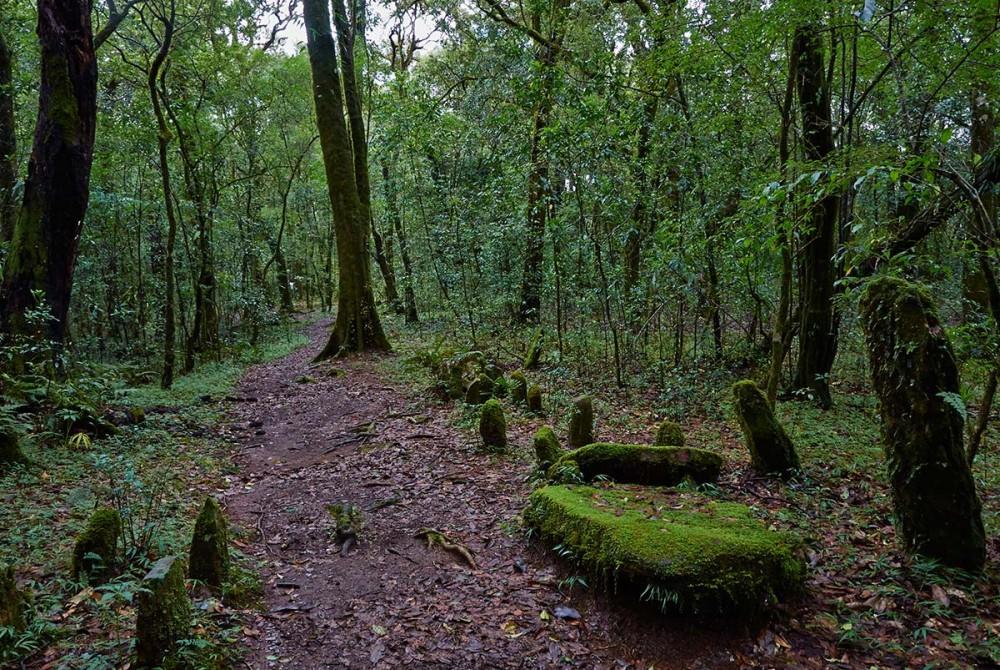
Communities such as the Khasi in Meghalaya and the Garasia in Rajasthan protect sacred groves that act as biodiversity hotspots, preserved for generations for both spiritual purposes and the conservation of rare medicinal plants and wildlife essential to ecosystem health. Rotational agriculture and grazing, employed by the Gond, Pradhan, and Baiga tribes, retain soil moisture and facilitate the direct return of animal dung to the land, so organically restoring fertility without the use of chemical inputs. The Bishnoi community in western India has preserved wildlife populations and water supplies through collaborative conservation efforts and religious mandates, limiting over-extraction and promoting a culture of shared environmental responsibility.
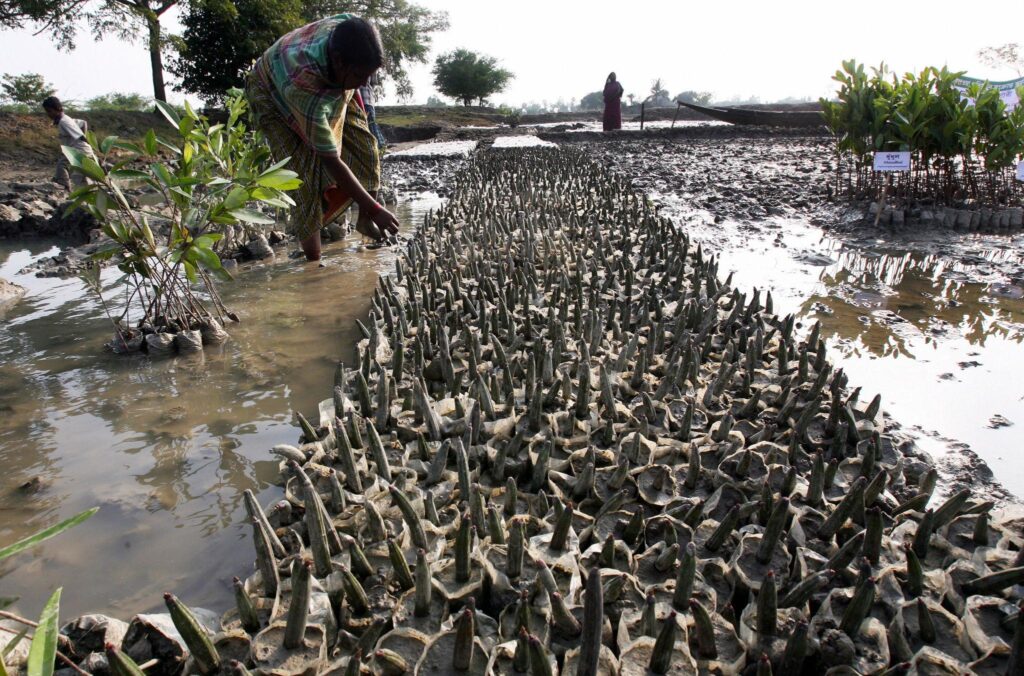
Coastal indigenous cultures also have powerful traditions. In the Sundarbans, indigenous fishers implement seasonal fishing prohibitions and habitat management, facilitating the recovery of fish stocks and the flourishing of mangroves. They also construct bamboo traps rather than employing nets that indiscriminately diminish biodiversity. The Kadars of South India harvest non-timber forest products such as honey and wild fruits using methods that ensure floral regeneration, consistently leaving sufficient resources for subsequent seasons and other species.
Conventional water harvesting techniques like the check-dams utilised by the Bhil and the terrace cultivation practised by the Apatani tribes in the Eastern Himalayas has shown how effectively water can be conserved, runoff mitigated, and safeguard crops from drought; these practices, in conjunction with community-oriented forest management and organic pest control, render Indian tribal agriculture one of the most resilient in the world. Tribal festivals, such as Sarhul among the Santals, integrate ecological knowledge into cultural practices, engaging communities in the monitoring of water levels, reverence for tree cycles, and the adoption of climate-resilient decisions throughout the year.
These traditions are not only remnants of history; they embody contemporary knowledge that fosters biodiversity conservation, ecosystem restoration, climate adaptation, and sustainable livelihoods. As climatic variability escalates, the enduring customs of India’s forest and coastal tribes provide essential strategies for constructing robust, climate-adaptive communities for the future. These small examples embody a worldwide view of existing as a part of nature rather than viewing it solely as a product. The deep connection of these indigenous communities with nature not only reflects their cultural identity but also promotes sustainable practices that are vital for climate change adaptation.
BAY OF BENGAL: LOCAL COASTAL COMMUNITIES ASK TO BE FIRST LINE OF DEFENCE ON CLIMATE
The expansive coastline of the Bay of Bengal is home to many indigenous fishing, agricultural and forest-based communities. These can be found mostly in Odisha, West Bengal and the Sundarbans. These communities are increasingly facing the threats of rising sea levels, more frequent cyclonic activities and saltwater intrusion. This is also turning their traditional productive lands into salty swamps. Former cyclones like Amphan (2020) stripped them of their traditional livelihoods and food sources, exacerbating the situation. These vulnerabilities are further increased because of the loss of mangroves, which serve as crucial buffers against storms.
Despite these adversities, community-based groups are making new strides in restoration of, mangrove regeneration, salt-tolerant rice cultivation and the use of traditional ecological knowledge for early warning systems and sustainable resource utilisation.
INDIGENOUS VOICES: BRIDGING THE GAP IN INDIAN LEGAL AND POLICY FRAMEWORKS
India has made important legal advances in recognising indigenous and forest-dwelling rights. The Scheduled Tribes and Other Traditional Forest Dwellers (Recognition of Forest Rights) Act (FRA) 2006, for example, ensures community rights over lands and forest produce, and the Biological Diversity Act (2002) recognises the role of the local custodians as stewards of conservation. Articles 21 and 48A of the Indian Constitution are two of the most widely interpreted Articles of the Constitution by the Courts and guarantee the Right to a healthy environment.
Recently, the Supreme Court judgment of M.K. Ranjitsinh v. Union of India acknowledged (Article 21) the right to be protected against adverse impacts of climate change as a fundamental human right, thus extending the scope of environmental rights jurisprudence.
However, community-based climate change adaptation and mitigation studies reveal that indigenous perspectives have been marginalised in many climate policies, including the National Action Plan on Climate Change (NAPCC), which has attempted to address climate change through fragmented means and without meaningfully involving them. Failing to integrate traditional ecological knowledge and community governance risks missing effective adaptation opportunities and perpetuates systemic injustices.
India’s Nationally Determined Contributions (NDCs) under the Paris Agreement should embrace indigenous knowledge as essential ways of life, rather than merely viewing them as resources. Transitioning from marginalisation to centrality is crucial for climate resilience.
ICJ 2025 ADVISORY OPINION: A RESTORATIVE LEGAL BLUEPRINT FOR INDIA
The 2025 International Court of Justice (ICJ) advisory opinion marks a milestone by affirming that the climate obligations are embedded not just in the treaties but also in the human rights, biodiversity protection and the core principles of equity, sustainable development and precaution.
India is a key player in driving a regional change despite facing significant challenges, and in such a scenario, the ICJ Judgment provides a strong impetus to create a comprehensive climate law for India that interlinks adaptation, restoration and indigenous stewardship. It highlights that it’s time not just to recognise the margin but to make the margin a place of reality.
International Cooperation has now become an imperative for the Bay of Bengal region, which is shared by India, Bangladesh, Myanmar, Sri Lanka and other neighbouring nations. These nations all together face a multitude of climate challenges that transcend national borders. These challenges are often intensified by cyclones, rising temperatures, rising sea levels, recurrent flooding, etc.
It’s time that legal reforms prioritise free, prior and informed consent in the management of land and biodiversity to support the indigenous adaptation. The ICJ’s opinion on climate change presents a once-in-a-lifetime opportunity to advance justice through rights-based, community-led governance. By treating indigenous knowledge as a collaborative partner, rather than a commodity hidden away, and by developing inclusive and climate-resilient legal and policy frameworks, India can position itself as a leader in achieving a just climate transition. Alongside empowering, justice-oriented regional climate governance, this approach can enable frontline communities not only to endure physically but also to guide India and the Bay of Bengal region towards a safer, more just, and resilient future.