
CASE COMMENT
When a civilisation destroys its own ecological shield, it signs a death warrant written in dust.
On 26 May 2026, the Supreme Court of India issued yet another round of stern orders against illegal sand mining in the National Chambal Sanctuary — and yet again, state governments were found wanting. Just weeks earlier, the bench of Justices Vikram Nath and Sandeep Mehta had summoned top Rajasthan bureaucrats, slamming the state’s “wholly casual, indifferent, and indolent approach” towards rampant illegal mining, irreversible environmental degradation, and destruction of protected wildlife habitats. The court had issued directions on April 2 and April 17. Not a single compliance affidavit had been filed.
This is not a legal story. This is a story about what happens when a government chooses not to notice that the sky is on fire.
A Mountain Range Older Than the Himalayas, Being Eaten Alive
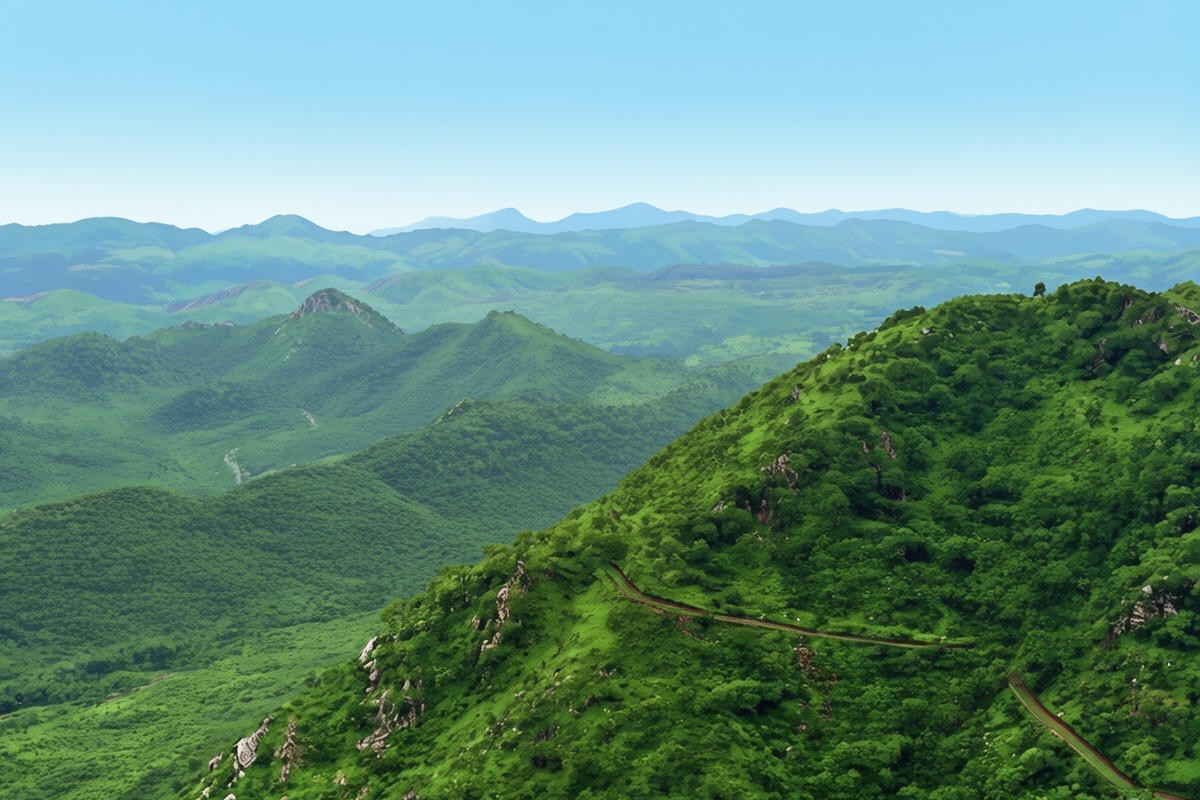
The Aravalli Range is not merely a geological accident. Stretching nearly 692 kilometres from Gujarat through Rajasthan to Haryana and Delhi-NCR, it is among the oldest surviving mountain systems on Earth — formed over three billion years ago, predating the Himalayas by eons. Ancient texts called it Pariyatra, and it formed the protective boundary of Brahmavarta, the heartland of early Vedic civilisation. Long before cities, laws, or economies existed, these hills quietly shaped the ecological destiny of northwestern India.
Today, they are being quarried out of existence.
More than one-fourth of the Aravalli region and 31 hill ranges in Rajasthan have reportedly disappeared due to illegal quarrying. Land under mining activity expanded from 1.8% in 1975 to 2.2% in 2019. Built-up areas surged from 4.5% to 13.3% in the same period. In Haryana, licensed mining has already wiped out most of the two-billion-year-old ecological heritage in the districts of Charkhi Dadri and Bhiwani. And then in November 2025, as if the erasure wasn’t happening fast enough, the Supreme Court accepted a new definition of the Aravalli Hills — one requiring a minimum elevation of 100 metres — which would, according to the Ministry of Environment’s own data, exclude over 90% of the range from legal protection, leaving only 1,048 out of 12,081 hills shielded from the excavators.
The rest? Open for business.
The Shield That Stops a Desert
To understand why this is catastrophic, you must understand what these mountains actually do.
The Aravalli range is India’s primary natural bulwark against the eastward march of the Thar Desert. For millennia, these ancient ridges have acted as a windbreak against dust transport from the Thar, as micro-catchments enabling groundwater recharge, and as corridors connecting fragmented wildlife habitats across Rajasthan and Haryana. The range gives rise to several major rivers — the Banas, Luni, Sakhi, Chambal, Sabarmati — and plays a vital role in recharging groundwater for millions of people in one of the most water-stressed regions of the planet.
According to a 2022 peer-reviewed study in the journal Water (MDPI), groundwater in the Udaipur district of the Aravalli range is already at 100.67% exploitation — technically “over-exploited”, with the total draft exceeding dynamic reserves. This is what’s happening while the hills still stand. Remove the hills, and the recharge zones don’t just disappear — they become stagnant pits that collect polluted runoff, contaminating the very groundwater that sustains agriculture and drinking supplies across the region.
The consequences of failing this natural barrier are already visible. A survey by the Wildlife Institute of India (WII) identified 12 gaps that have appeared in the Aravallis due to sand drift — stretching from Magra hills in Ajmer district to Khetri-Madhogarh hills in Jhunjhunu and beyond — raising the risk of the area becoming an extension of the Thar Desert. This summer, Gurugram witnessed a surge in the frequency, longevity, and density of dust storms, a sign, warn experts, that desertification is actively advancing.
In Rajasthan alone, 68.3% of the land is already under some form of desertification pressure. Nationally, a 2017 report by the Centre for Science and Environment (CSE) found that in 26 of 29 states, the area facing desertification had increased over the previous decade, with 40–70% of land degraded in states including Rajasthan, Delhi, and Maharashtra. The Union Environment Minister once noted that India loses 23 hectares of dry land to drought and desertification every minute, resulting in a loss of 20 million tonnes of potential food grain production annually. Every hill that falls to a quarry accelerates this calculus.
India Is Now the Hottest Country on Earth
Step back from the Aravallis for a moment and look at what India has become in 2026.
On the morning of May 22, 2026, every single spot in the world’s top 50 hottest cities belonged to India. Not one exception. Odisha’s Balangir hit 45°C before 11 AM. Chandrapur and Prayagraj climbed to 44°C before lunch. Within days, 97 out of the world’s 100 hottest cities were recorded within India, with Balangir eventually reaching 48°C and cities across Odisha, Bihar, Uttar Pradesh, Rajasthan, Punjab, and central India logging temperatures between 45°C and 48°C.
This is not a seasonal anomaly. This is a trajectory.
In 2024, Rajasthan’s Churu district recorded 50.5°C — the highest temperature in India in eight years. Phalodi, also in Rajasthan, sizzled at 51°C. The 2024 heatwave killed at least 219 people and hospitalised over 40,000. In 2025, Sri Ganganagar in Rajasthan hit 48°C as early as mid-April, temperatures departing 6°C above seasonal averages. Jaipur crossed 40°C for five consecutive days beginning April 6. The India Meteorological Department (IMD) now warns that temperatures in various states could exceed 45°C and potentially reach 48°C, with projections in extreme cases approaching 50°C.
Meteorologists attribute this inferno to a combination of factors: climate change intensifying heatwaves year on year; delayed pre-monsoon rains; dry northwesterly winds sweeping in from Rajasthan and Pakistan and blasting hot air across the Indo-Gangetic plains; and heat dome effects trapping hot air for days. But here’s what the forecasts don’t say loudly enough: the destruction of the Aravallis is removing the one natural air-conditioning system that the region has relied upon for three billion years.
Research has shown that when lower ridges of the Aravallis are removed, dust loads increase significantly, leading to poor air quality and rising temperatures. The range acts as a physical and biological filter — forested slopes and scrubland trap dust and particulate matter, moderating the severity of dust storms that sweep into Delhi-NCR. Remove the biological filter, and you remove the only natural brake on temperatures already at civilisational limits.
A Government That Cannot See What Is in Front of It
The tragedy is not that the state doesn’t know. The tragedy is that it knows and has chosen to look away.
The court has issued direction after direction; states have filed affidavit after affidavit, promising compliance. And yet, by May 2026, in the Chambal sanctuary alone, only one CCTV camera had been operationalised in Rajasthan despite the court identifying multiple monitoring routes. Unregistered tractors and mining vehicles continue to operate unchecked. Illegal excavation is occurring dangerously close to — and even beneath — the pillars of a National Highway bridge at the Morena-Dholpur border.
The Central Empowered Committee (CEC) recommended in its March 2024 report that no new mining leases or renewals be permitted until complete scientific mapping by the Forest Survey of India and macro-level Environmental Impact Assessments (EIAs) were done — recommendations later adopted in the Supreme Court’s November 2025 order. As the Supreme Court Observer documented, even the mapping mandate — with a six-month deadline — remains unfinished. The Aravalli Green Wall initiative — India’s own version of Africa’s Great Green Wall, a proposed 1,400-km, 5-km-wide green belt across Gujarat, Rajasthan, Haryana, and Delhi aimed at reversing land degradation — has been announced with fanfare and starved of urgency.
The state of Rajasthan’s compliance with Supreme Court orders, as characterised by the bench itself on May 26, 2026, was “extremely poor.” The court noted that critical surveillance infrastructure — CCTV systems, GPS tracking, monitoring networks — remain barely operational despite months of explicit judicial direction. It is worth pausing on that phrase. Extremely poor. Spoken not by an NGO, not by a journalist, but by the highest court in the land, about a government’s response to an environmental catastrophe unfolding in real time.
What the Hills Are Losing, and What We Are Losing With Them
Beyond the geopolitics of mining leases and judicial orders, there is the quiet, irreversible matter of what disappears when a mountain is gone.
The Aravallis are home to over 300 bird species, leopards, striped hyenas, jungle cats, and myriad other wildlife. Mining blasts fragment ecological corridors, driving human-wildlife conflict and threatening species survival. The Chambal sanctuary: the epicentre of the current Supreme Court battle — shelters the critically endangered gharial, Ganges river dolphin, and red-crowned roof turtle. Sand extraction from their river habitats is not merely illegal — it is an extinction event in slow motion.
The Aravallis also regulate precipitation. Forest cover in the Aravallis enhances rainfall and checks drought across Gujarat, Rajasthan, Haryana, and Delhi. Deforestation of the range leads to less moisture in the air, which causes sand storms that grow more frequent and severe as degradation continues. This is not A hypothesis — this is observed reality. A ScienceDirect study monitoring drought dynamics in the Aravalli region found that high temperatures combined with poor rainfall in successive years directly hinder groundwater recharge, triggering severe drought across the monsoon and non-monsoon seasons alike.
Meanwhile, according to a Down to Earth analysis, by privileging elevation over ecological function in the new 100-metre definition, the law substitutes a visible metric for an invisible reality. These excluded low-lying features are not ecologically insignificant — they are the windbreaks, the micro-catchments, the wildlife corridors. Ecological systems, as the analysis bluntly states, do not operate according to neat numerical thresholds.
The Clock Is Running Out
India is a signatory to the UN Convention to Combat Desertification (UNCCD, ratified 1996) and has committed to restoring 26 million hectares of degraded land by 2030. As of 2024, 18.94 million hectares have been restored — a meaningful figure that becomes meaningless if the government simultaneously dismantles the natural infrastructure preventing further degradation.
You cannot restore 19 million hectares with one hand while destroying the Aravallis with the other.
The Aravallis play the same role for India that the Great Green Wall plays across Africa’s Sahel — arresting the eastward expansion of the Thar Desert, protecting Delhi, Jaipur, and Gurugram from desertification, and sustaining the rivers that feed millions. Africa’s 8,000-km green wall has restored 18 million hectares across 11 countries. India’s equivalent exists already — built by time itself, three billion years in the making. And we are dynamiting it for sandstone and marble.
The Supreme Court’s frustration with “administrative apathy and institutional paralysis” in Rajasthan is not just about a sanctuary or a river. It is about a state — and by extension, a nation — that cannot bring itself to enforce the most basic environmental protections even as its own cities become the hottest places on Earth. Even as its own children grow up learning what 50°C feels like. Even as its desert advances, year by year, kilometre by kilometre, towards the capital.
The Aravallis are not asking us to make a sacrifice. They are asking us to stop making one.
Sheetal Shrimali is Assistant Professor at the School of Law, Manipal University Jaipur, where her research sits at the intersection of environmental and wildlife law, and climate change law and policy. She has served as a Research Fellow with the Wildlife Institute of India and has been actively engaged in policy analysis, legal scholarship, and advocacy on climate change governance and biodiversity protection.
Read More by sheetal Shrimali.